Author Archive


Pro Silva Britain visit to Rothiemurchus Estate

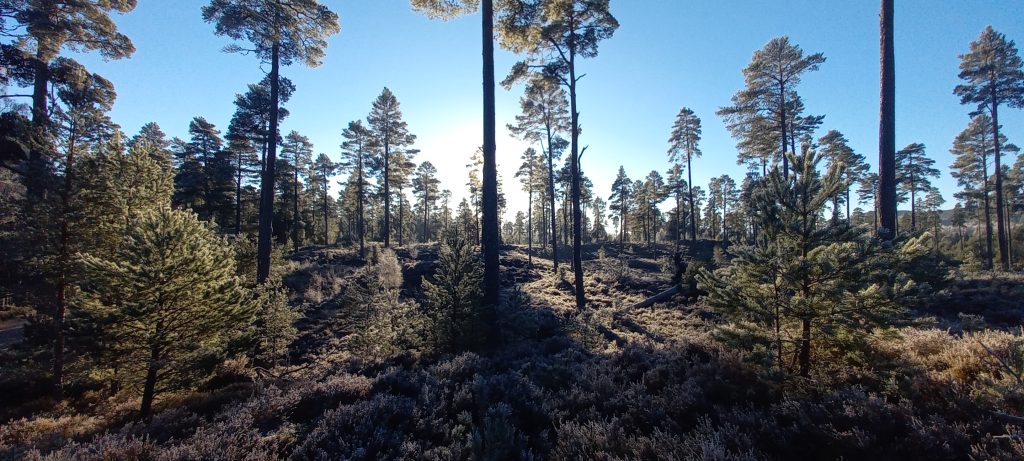
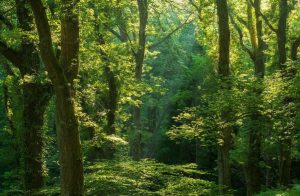
Rothiemurchus estate covers 10,000ha in the heart of the Cairngorms National Park from the top of Braerieach to the banks of the Spey. The focus of our visit will be the woodlands of pine and the ancient Caledonian Forest. The estate offers a wide range of outdoor activities and the interaction between visitors and the forest will, no doubt, feature in our discussions.

More details will be available closer to the time, so if you book, please check your emails for updates. 

Rendezvous time – 9.30 hrs for 10.00 start, Thursday 29th Oct 2026

Meeting point – Estate Office, Inverdruie, near Aviemore

Carpark facilities – 

Terrain – 

What to bring – Suitable in-forest footwear and waterproofs. For biosecurity, please ensure footwear is clean before arrival.

Lunch and drink – As we will be picnicking in the forest, please bring your own lunch, drink and snack requirements. 

Finish time – Back to the carpark by 16.00 hrs.

Booking – is essential. To allow for good discussion and facilitate logistics, places at the meeting will be limited in number. Priority will be given to Pro Silva Britain members, and there will be a waiting list if numbers exceed this so please let us know if you cannot make it. To book, please click this link. 

For any queries, please contact Polly Spencer-Vellacott, Pro Silva Britain Administrator. 

The second webinar of the 2026-27 season will be on Thursday 15th October at 4pm (BST). 

Project iDeer – a tool for strategic woodland creation and deer management

With Amy Gresham and Becks Spake

Wild deer populations have increased dramatically throughout the northern hemisphere during recent decades. The UK is home to six deer species that can substantially impact the natural systems that we all depend upon. Capable of rapidly colonising newly created woodlands, deer can inhibit growth by browsing young trees, saplings, and seedlings. Consequently, deer present a serious challenge to the government’s ambitious target to increase woodland area from 13% to 18% of UK land area and achieve net zero by 2050. It is therefore essential that people involved in woodland management plan for deer impacts.

Whilst managing deer populations and designing planting schemes to mitigate their impacts is more important than ever, managing deer is challenging. They are highly mobile animals that cross man-made boundaries, and their local foraging decisions are driven by environmental characteristics of the broader landscape. Consequently, local management actions on a single property can elicit effects that cascade across entire landscapes and influence deer impacts on land elsewhere. For example, fencing a woodland might displace deer to neighbouring farmland, or planting trees locally will alter woodland cover and configuration at the landscape scale, influencing deer movement and impacts elsewhere.

Rural landscapes across England and Wales are comprised of patchworks of land uses and landowners with varying and even conflicting management objectives, including different views on deer. Indeed, while considered a ‘pest’ to many landowners, deer are culturally and economically valued by others. In such situations, woodland creation and management decisions that influence deer behaviour and foraging preferences are necessary to ensure successful woodland expansion. These decisions could include, for example, where to locate new woodlands, fencing, alterations to woodland tree species and structure, or the provision of alternative food resources or deer repellents. However, landowners may not be aware of these options, their effectiveness, or the scientific evidence behind them. Indeed, while scientific understanding of deer ecology, impacts and mitigation is evidenced by a vast literature from across the temperate zone, much remains to be done to translate this knowledge into management practice, in a way that integrates local expertise and multiple stakeholder objectives. Project iDeer has been designed to address this incorporation and implementation gap.

Project iDeer will deliver a co-designed interactive decision support tool – the ‘iDeer Tool’ – to facilitate strategic woodland creation and management that minimises deer impacts on new and existing woodland and other neighbouring land uses in England and Wales. Landowner consultations from previous projects have established a clear desire for digital decision support tools that integrate local with scientific knowledge to inform land management plans. The iDeer tool will output ‘risk maps’ that enable users to see how choices in woodland management made by one landowner will influence deer activity on neighbouring land and the wider landscape. For example, how the creation and fencing of one hectare of woodland on one land parcel might increase crop disturbance by deer on the neighbouring land parcel. Users will be able to output and compare these risk maps enabling them to make informed decisions about how to manage their land whilst also considering impacts on neighbours and the wider landscape.

For more background on the project please see https://research.reading.ac.uk/ideer/


Amy Gresham

Amy is an ecologist interested in researching the environmental drivers of animal behaviour and implications for population management and conservation. She has a PhD from Bangor University, where she studied the habitat use and diet of a fallow deer (Dama dama) population in North Wales. Following the PhD, Amy was a Postdoctoral Researcher at the University of Reading and University of Southampton on the iDeer project, where she designed expert-informed Bayesian Belief Network models to predict deer impact risk to woodlands across England and Wales. Amy is now a Postdoctoral Research Associate exploring Landscape Restoration and Connectivity indicators with Rob Fletcher’s team at the University of Cambridge.


Becks Spake

Becks is an Associate Professor in Climate and Environmental Change in the School of Geography and Environmental Sciences at the University of Southampton. Her research focuses principally on deer and forest management, using causal inference, machine learning, simulation and fieldwork. She previously led the iDeer Project, and now leads the NERC-funded project ‘PRECISE’: Precision Ecology for a Changing World, which seeks to develop workflows for ecologists to make causal predictions about restoration outcomes. More here: https://treelabecology.weebly.com/

To book your place please visit this link.  

Our first webinar of the season took place on Thursday 17th September, with

Georg Josef Wilhelm, CDU, Erster Beigeordneter
Ltd. Forstdirektor
Geb.Jahrgang 1957
Stadtteil Bierbach

Georg Josef Wilhelm giving us an insight into his close-to-nature forestry strategy, Qualification-Dimensioning. As ever, the talk was followed by some questions and discussion. The talk is now available to view on YouTube: 


You can also read Georg’s article on the subject in our newsletter last year: https://www.ccfg.org.uk/wp-content/uploads/2025/11/04-Qualification-Dimensioning.pdf 

More information is available at https://www.wald.rlp.de/fileadmin/website/downloads/3nutzen/boehmer/qd_engl.pdf 

The first webinar of the 2026-27 season will be on Thursday 17th September at 4pm (BST). 

Qualification – Dimensioning: A high quality – low input strategy for continuous cover management

With Georg Josef Wilhelm
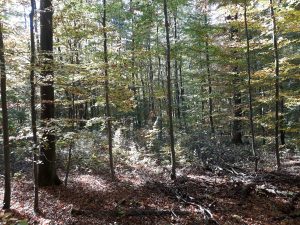
“Qualification–Dimensioning” (QD) strives for the best integration into the natural dynamics of woodland ecosystems. Both the observation and careful assessment of above-ground interactions between trees provide the framework for targeted management practices. As a comprehensive methodology, QD offers a reliable basis for the production of very high added value stems in a small number of trees with very large crowns. Although these stems prdouce a low proportion of the total volume from the overall stand, they make a very high contribution to the total added economic value whilst reducing management costs.  Additionally, woodlands and forests managed under QD have considerable scope to provide for high value ecosystem and biodiversity services without compromise to high value timber objectives.

QD can be applied to woodlands of any composition and structure. It enables the straightforward conversion of young, even-aged forests into uneven-aged, continuous cover woodlands. QD allows for a wide range of tree species to be included in the mixture.

Qualification: During the early period of their dynamic height growth, the spontaneous development of the trees is given free rein to select according to vitality. Intimate contact between the trees drives the processes of differentiation and structuring. The effects of these processes intensify and solidify with each subsequent vegetation period. QD does not intervene in this spontaneous process in any substantial way. In terms of management, it is only important to ensure that there will be sufficient options in terms of number, distribution and species diversity when the time comes to select the target-trees.

Dimensioning: Once the desired knot-free stem height has been reached, the target-trees for the production of added value are selected. The intended branch-free stem height for the target-trees in QD is around 25% of their final height. Throughout the dimensioning phase, the target-trees are favoured by repeated interventions to exclude the death of branches at their crown base an to make sure that their crown spread progresses unhindered.

Maturation: Once a target-tree has reached 75-80% of its final height, crown contact with other target-trees is harmless.

Regeneration and Establishment: Regeneration is a perpetual process that sets in when trees are in their advanced dimensioning phase. Any operations and investments, including planting if necessaray, are restricted to clumps measuring 5 to 7 metres in diameter, spaced 12 to 18 (24) metres apart. These clumps ensure sufficient recruitment of future target-trees.

Georg Josef Wilhelm

Georg Josef Wilhelm was born in 1957 and completed his Forest Sciences studies at the University of Freiburg in 1981. Following careers as a forest planner, forest office manager and department head at the Central Office of the Forestry Administration of Rhineland-Palatinate, he served as a senior official in the Ministry of Climate Protection, Environment, Energy and Mobility of Rhineland-Palatinate from 2015. Until his retirement in June 2023, he was responsible for close-to-nature forest management, forest protection, forest planning, and forest research. From 2005 to 2019, he was a member of the Scientific Council of the French National Forestry Office (ONF).

He developed the close-to-nature forest management strategy Qualification-Dimensioning (QD), which has been playing an important role in Rhineland-Palatinate for more than 30 years now.

He has close ties to practical forestry through his honorary engagement, including 10 years as first deputy mayor, in the town of Blieskastel with its 1,900-hectare municipal forest. However, his most significant connection to continuous-cover management is his own private woodland in north-eastern France, which was awarded the Nature Impact Fund of WWF France in 2025.


To book your place please visit this link. 

All our members are warmly invited to attend our Extraordinary General meeting on 11th June 2026.

This will be a chance to consider the new constitution of Pro Silva Britain and we will be confirming the first board of trustees prior to submitting our application to register Pro Silva Britain as a Charitable Incorporated Organisation. 

This meeting will be online via Zoom – please book your tickets HERE.

You may pass on your apologies if you wish to administrator@ccfg.org.uk

Pro Silva Britain

Following the AGM in March, here is a letter from our Chair: 

Dear CCFG Members,

I’m writing to update you on some exciting developments at CCFG. Over thepast year we have been busy working on the organisation’s strategy, which has involved consultation with members, an appraisal of our partners andstakeholders, and the identification of three strategic objectives. The process has been rather long but extremely valuable for the committee as we are now working on the operational plan to deliver against these new objectives overthe next 10 years. A summary document presenting our strategy will be shared on our website very soon!

Two recommendations emerged from our strategy, firstly renaming and rebranding the organisation as Pro Silva Britain, this is to better align our mission, principles and communication with the 26 member countries in the Pro Silva family; and second to become a charitable incorporated organisation, which will enable us to apply for grant funding to run projects as we grow as an organisation. In forming the new charity, we would be very pleased to hear from any members who might be interested in becoming a trustee and helping to guide Pro Silva Britain in achieving its mission of promoting the benefits of Continuous Cover Forestry, for the environment, for society and the economy. We are particularly interested to hear from any members who would be willing to undertake the role of Treasurer, as our current Treasurer Solange Montero Terry will be standing down at our AGM in 2027. There are also opportunities to get involved in the work of our country branches in either England, Scotland or Wales, so please email me directly if you would be interested in getting involved in any of these roles, and to bepart of a very exciting time in the organisation’s evolution!

Please join us at the extraordinary general meeting on Thursday 11th June, and hoping to see you on a field visit very soon!

Best regards

Jonny Hulson


CCFG visit to Morton Hall

By invitation from Andrea Mason

THEME:

The Morton Hall Estate woodlands comprise some 86 ha located to the west of Retford in north Nottinghamshire. They originate from nineteenth and twentieth century plantations on marginal agricultural land.

Our main management objectives are:

1) To maintain and enhance the landscape values of the woodlands;

2) To increase the production of quality timber;

3) To increase biodiversity value and to conserve existing ecological features;

4) To increase woodland resilience against the impacts of climate change and other hazards;

5) To manage the woodlands to make a profit.

CCF type regimes were introduced into the management of old broadleaved stands at Morton over 40 years ago. We use a system of small gap plantings to introduce structural and species diversity. We have a wide range of species present in the stands and use the tree collection in the pinetum to help advise potential future plantings of alternative species. We also use ESC climate predictions to attempt to future-proof our plantings. Control of browsing animals since the 90’s has increased natural regeneration in many parts of the woodlands.

For more information please see this link to a Quarterly Journal of Forestry article. 

Rendezvous time – 9.30 hrs, Saturday 16th May 2026

Meeting point – Morton Hall Woods, nr Retford, Nottinghamshire, DN22 8HW.

Carpark facilities – There is one toilet near the carpark. 

Terrain – The walking is mostly on well-managed rides. There is a possibility of car-sharing to visit the second location. 

What to bring – Suitable in-forest footwear and waterproofs. For biosecurity, please ensure footwear is clean before arrival.

Lunch and drink – As we will be picnicking in the forest, please bring your own lunch, drink and snack requirements. 

Finish time – Back to the carpark by 16.00 hrs.

Booking – is essential. To allow for good discussion and facilitate logistics, places at the meeting will be limited in number. Priority will be given to CCFG members, and there will be a waiting list if numbers exceed this so please let us know if you cannot make it. To book, please click this link. 

For any queries, please contact Polly Spencer-Vellacott, CCFG Administrator. 

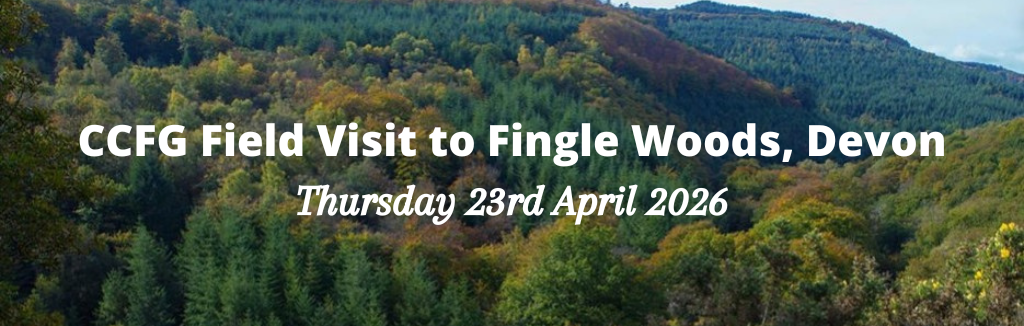
CCFG visit to Fingle Woods, Devon

By invitation from the Woodland Trust

THEME:

An opportunity to discuss the early stages of the transformation to CCF as part of the woodland restoration project at Fingle Woods. We believe we have selected a number of stops to demonstrate how a well-managed conversion from a partially neglected conifer plantation to a more structurally varied woodland and ecologically diverse habitat can be achieved. We are at the initial stages of that conversion but it’s a good time to discuss the speed of that conversion and how the blend of economic and ecological factors are influencing that speed, as well as the impact that the topography and deer pressure have on its success.

For more information please download a map of the visit and Fingle Woods CCFG visit programme. 

Rendezvous time – 9.30 hrs, Thursday 23rd April 2026

Meeting point – Fingle Woods

Carpark facilities – We would like to share vehicles during the day to reduce vehicles. Please indicate during booking if you have a vehicle that is 4WD or with high ground clearance and you would be willing to drive it with others. Composting toilets are available at the meeting point. 

What to bring – Suitable in-forest footwear and waterproofs. For biosecurity, please ensure footwear is clean before arrival, although a biosecurity station will be set up for cleaning on arrival. 

Lunch and drink – As we will be picnicking in the forest, please bring your own lunch, drink and snack requirements. 

Finish time – Back to the carpark by 16.00 hrs.

Booking – is essential. To allow for good discussion and facilitate logistics, places at the meeting will be limited in number. Priority will be given to CCFG members, and there will be a waiting list if numbers exceed this so please let us know if you cannot make it. To book, please use this link. 

For any queries, please contact Polly Spencer-Vellacott, CCFG Administrator. 

AGM 2026

CCFG Event

Date: Thursday 19th March 2026
Location: Online over Zoom


Description:

The 2026 AGM will be on Thursday 19th March 2026 at 4pm.

All members are warmly invited to attend. 

Booking: You can book to attend the AGM HERE
Contact: You may pass on your apologies to administrator@ccfg.org.uk.

CCFG Event

Welcome to the 52nd issue of the Continuous Cover Forestry Group Newsletter, containing Jonny Hulson’s Chair’s report,  a report on the field visit to Stourhead as well as the Pro Silva meeting in Sardegna, and articles on pruning and a German approach called Qualitative Dimensioning. 

Contents:

                1. Chair’s Report – Jonny Hulson
                  Download (451 KB )
                2. Stourhead Field Visit – Solange Montero Terry
                  Download (3 MB )
                3. Pro Silva Europe General Meeting – Sardegna – Ben Wilson
                  Download (3 MB )
                4. Qualification Dimensioning – Georg Josef Wilhelm
                  Download (1 MB )
                5. Pruning and matching species in a broadleaved stand – Fraser Bradbury
                  Download (3 MB )
                6. Committee Members
                  Download (445 KB )
                7. Welcome to New Members
                  Download (436 KB )
                8. Bits and Pieces
                  Download (1 MB )