
Following a webinar on 20th November with David Jam, a recording has now been made available on YouTube which you can view using this link.
 |
 |
 |
Following a webinar on 20th November with David Jam, a recording has now been made available on YouTube which you can view using this link.
|
|
|
 CCFG visit to Castle Hills and Nutwood, near Leeds, West Yorkshire
Please arrive at 9.30am so that we can start promptly at 10.00am
Themes: PAWS sites and productive coppice management
The visit details
Meeting point
Mickelfield MX Track
On arrival, drive underneath the bridge and park on the left hand side as close as possible to other vehicles due to limited parking space.
Google pin: https://maps.app.goo.gl/XifDMkEh41Nbv15p7
What to bring: Outdoor clothing and rugged cleaned footwear.
Booking is essential. To allow for good discussion and facilitate logistics, places at the meeting will be limited in number. Priority will be given to CCFG members, and there will be a waiting list if numbers exceed this so please let us know if you cannot make it. To book, please click this link.
For any queries, please contact Polly Spencer-Vellacott, CCFG Administrator.
Following a webinar on 16th October with Kate Holl and Tom Crowther, a recording has now been made available on YouTube which you can view using this link.
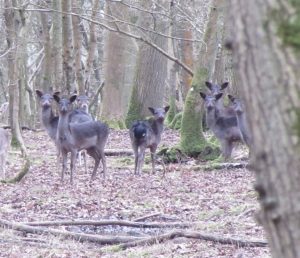
CCFG will be hosting their next webinar – Why do we need to be concerned about deer? – with David Jam – on Thursday 20th November at 4pm GMT.
Summary of presentation:
David has over 35 years’ experience within forestry and deer management, at a practitioner, operational and strategic level within the public and private sector.
He is based in Herefordshire but has a national remit.
His experience has included:
His current remit includes:
To book your place please visit this link.
 CCFG visit to Gwydir Forest, Gwynedd
Please arrive at 9.30am so that we can start promptly at 10.00am
Themes: Continuous cover forestry in Gwydir Forest
Booking is essential. To allow for good discussion and facilitate logistics, places at the meeting will be limited in number. Priority will be given to CCFG members, and there will be a waiting list if numbers exceed this so please let us know if you cannot make it. To book, please click this link.
For any queries, please contact Polly Spencer-Vellacott, CCFG Administrator.
CCFG will be hosting their next webinar – Woodland Ecosystems and Carbon – with Tom Crowther and Kate Holl – on Thursday 16th October at 4pm BST.
The relationship between woodland ecosystems and carbon is a complicated but increasingly important one, with many European countries now proritising sustainable forest management as a way of building resilience to climate change and pests and diseases. Our autumn webinar will be a fascinating discussion with Thomas Crowther and Kate Holl. 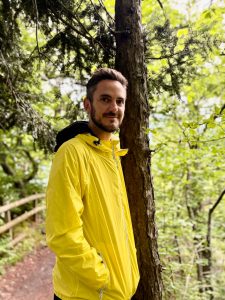
Thomas Ward Crowther is a professor of ecology and the founding co-chair of the advisory board for the United Nations Decade on Ecosystem Restoration. He is the head of Crowther Lab, an interdisciplinary research group exploring the role of biodiversity in regulating Earth’s climate. In 2020 he founded Restor, an international organization that supports hundreds of thousands of local community-restoration initiatives across the globe. He was a finalist in Prince William’s earthshot prize, and the world economic forum recognized him as a young global leader for his contributions to global nature conservation.
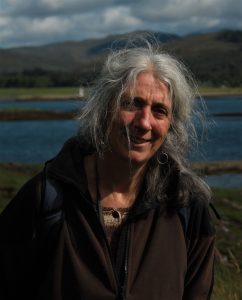 Kate Holl has been a woodland advisor with NatureScot and its predecessors for almost 40 years, specialising in assessing woodland habitat condition, particularly the evaluation of herbivore impacts in natural woodland. She is a joint author of the Woodland Herbivore Impact Assessment method, and in 2017 under a Churchill Fellowship, travelled widely within the North Eastern Atlantic bioregion to learn about the flora of woodlands less impacted by herbivores.
To book your place please visit this link.
Abbey St Bathans, Berwickshire
Hosted by Ellinor Dobie
Themes for the day
Booking is essential. To allow for good discussion and facilitate logistics, places at the meeting will be limited in number. Priority will be given to CCFG members, and there will be a waiting list if numbers exceed this so please let us know if you cannot make it. To book, please click this link.
For any queries, please contact Polly Spencer-Vellacott, CCFG Administrator.
 CCFG will be hosting their next webinar – Biomass – Fuel – Silviculture: The role of CCF in fire prevention- with Alex Held – on Thursday 23rd January 2025 4-5.30pm.
Weather permitting, all biomass can become fuel for a wildfire. Fire spread is determined by the fire behaviour influencing factors: weather, topography, and fuels. While we foresters cannot modify weather nor topography, biomass (fuel) we can indeed modify and with this have positive or negative influence on fire spread, fire intensity and its severity and negative effects. CCF is providing a toolbox of silvicultural measures to increase our forests resilience in that regard.
Alexander Held holds an MSc in Forest Science from  Freiburg University, Germany. He started as a fire ecologist at the Fire Ecology working group of the Max-Planck Society, got a number of operational qualifications in the US and South Africa. He moved from fire ecology to fire management and worked with the Global Fire Monitoring Center GFMC in Europe and Southern Africa. Later, Alex worked with the South African Working on Fire Program, from its early beginnings till 2012, when he joined EFI.
At EFI, Alex works on the current project Waldbrand-Klima-Resilienz, where the exchange of expertise and knowledge, mutual assistance and cooperation in Europe is the tool to create more resilient landscapes and better-informed fire management for Germany. His expertise is in fire management, silviculture and deer management for resilient forests.
See examples of Alex’s work in media here.
To book your place please visit this link.