

CCF G will be hosting their next webinar – Biodiversity responses to transformation to irregular high forest – with Danny Alder – on Thursday 21st March 2024 4-5pm.
Danny’s talk will be about the biodiversity research project on the Rushmore Estate on the Dorset-Wiltshire border looking at the responses of woodland birds, bats and woodland plants to different stand management with a particular focus on the introduction of irregular high forest management.
The forest manager at Rushmore is Andy Poore, a founder member of CCFG, who gave a webinar in 2021 – to watch Andy’s talk for more background on this site please see this link.
Understanding how biodiversity responds to changes in the management of woodlands can be helpful to forest managers, especially in woodlands with a high nature conservation value, and more generally where the aim of forest management is to work with natural processes towards sustainable management. In this study on the Rushmore Estate, in the Cranborne Chase National Landscape, different taxonomic groups were sampled across different stand types. These included 1) traditional coppice and coppice with standards, 2) limited intervention, stands where management had effectively stopped for at least 30 years, 3) Irregular high-forest; a single tree or small group selection system which had been introduced in the 1980’s, and 4) Transitional management where stands were at the early stages of transformation towards irregular high-forest, which had come out of production and were either over-stood coppice or pole-stage, closed canopy. To help understand the responses of the different taxonomic groups it was important to look at how the structure of the woodland varied and relate these structural characteristics to the different species encountered.

The talk will highlight the study methods and main findings, and will discuss the implications of the research which has produced three peer-reviewed papers in Forest Ecology and Management. A summary technical article is due to appear in the spring of 2024 in the Quarterly Journal of Forestry.
Dr Danny Alder undertook this research towards his PhD within the Natural Sciences department at Manchester Metropolitan University. Danny lives in Dorset and is an ecologist working in countryside management. He has a special interest in conservation ecology and research focusing on woodlands and their management.
To book your place please visit this link.

 )
)


 The talk will describe the main silvicultural systems we can use to manage forests and give a personal view about their application in Britain. In addition, the talk will give a summary of a the main risks to forests from climate change, the possible impacts and the evidence base for how the use of continuous cover can help mitigate these risks. Finally, the talk will consider how best to communicate ‘how to do continuous cover’ to new audiences. Along the way Gary will be asking the audience some questions, so have a paper and pen handy and be honest with yourself when the answers are revealed!
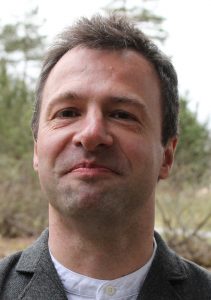
 Research until September 23. The main thrust of his work has been applied silvicultural research and this has led to over 50 papers in peer reviewed journals, 16 Forestry Commission publications and over 50 articles in professional publications communicating the results of research. For the last ten years his work has focussed on alternative approaches to management and continuous cover silviculture. He was the Editor-in-Chief of Forestry: An International Journal of Forest Research, published by Oxford University Press for 20 years. After retiring from Forest Research he divides his time between working as the Commissioning Editor for the Quarterly Journal of Forestry, Chairing the Scientific Advisory Board of the European Forest Institute and continuing his association with FR as a Research Fellow.
 Continuous Cover Forestry (CCF), i.e. forest management based on ecological principles, has been introduced to Ireland and the UK more than twenty years ago. Whilst in the early days identifying simple and robust methods of transforming plantations to woodlands with more complex structures were the primary concern, ongoing climate change and the recent energy crisis have added new challenges of managing for CCF. Many policymakers including the authors of the recent EU forest strategy and of associated recommendations proposed by the European Forest Institute see CCF as a major instrument for mitigating adverse effects of climate change. In this context, carbon forestry has become a major buzzword and a research field in its own right, however, it is still largely unknown how exactly existing woodlands should be managed for optimising carbon sequestration. Questions like “Is carbon forestry part of or a concept separate from CCF?” or “Can carbon forestry be carried out along with other management objectives or is a special focus required?” are hotly debated. Ongoing climate change and all its localised realisations such as spontaneous gales, droughts, floods and insect calamities can always bring the sudden end to any CCF woodland that we have transformed for many years with great effort. In that situation we may be left with little more than bare ground and methods are needed to establish new CCF
 woodlands from scratch. CCF from scratch may also include the use of coppice systems, particularly the use of coppice with standards and coppice selection systems. Such system can contribute to satisfying the current demand for sustainable energy whilst creating diverse habitats and providing high-quality timber at the same time.