
CCFG will be hosting their next webinar – A long-term study of transformation to CCF in Sitka spruce in Ireland
with Ted Wilson, Thursday 23rd February 23, 4pm – 5pm
This online event is hosted by CCFG featuring Ted Wilson who will deliver a 30 minute presentation on this topic. This will be followed by a question and answer session for participants.
There is growing interest in the wider adoption of continuous cover forestry (CCF) in Ireland. This is linked strongly to woodland owner preferences for closer-to-nature forest management, climate adaptation policy and wider societal drivers for functionally diverse woodlands that deliver multiple ecosystem services. The key technical and professional challenge is the transformation of productive Sitka spruce plantations. To address this issue, a research project was initiated in 2010 by University College Dublin (UCD) which established the first long-term study in early-stage stand transformation that compared three types of thinning regime, low (conventional) thinning, crown thinning and graduated density thinning. The latter two represent “transformation pathways” with potential for application on a range of sites. The research has been sustained through the LISS project (2010-2014), TranSSFor Project (2017-2022) and the ContinuFor project (2022-2027). Partners include UCD, Maynooth University and Teagasc. Parallel to the research programme has been an extensive series of training and knowledge transfer courses and events, much of which is delivered in partnership with Pro Silva Ireland. In this presentation, Ted will present an overview of the study, some preliminary results and demonstrate the links between applied research and training.
Biography
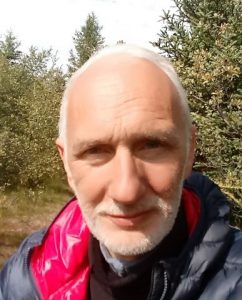
Edward (Ted) Wilson is a silviculturist who specialises in the sustainability, resilience and conservation of temperate and boreal forests. His career has been multi-faceted, with roles in forest management, public policy, research and education. He has worked in Canada, the UK and Ireland, and held posts with several organisations, including the Canadian Forest Service, Ontario Ministry of Natural Resources and Forestry, UK Forestry Commission, the Royal Forestry Society and Teagasc. He has delivered projects in more than 15 countries. Ted’s research interests are in the areas of tree biology, woodland establishment and silvicultural systems, especially continuous cover forestry (CCF). His current focus is the transformation of even-aged Sitka spruce stands to irregular structure forests. Working closely with colleagues in several organisations, he delivers an ongoing series of workshops and courses on CCF, especially tree marking, biodiversity conservation and management. Ted is adjunct professor of silviculture at the Institute of Forestry and Conservation, University of Toronto, is a Technical Member of the Society of Irish Foresters, and Fellow of the Royal Society of Biology.
Wilson, E. R., I. Short and Á. Ní Dhubháin. 2023. A long-term study of transformation to CCF in Sitka spruce in Ireland. Webinar. Continuous Cover Forestry Group. 23 February 2023.
 Following our most recent successful webinar we have now made a recording available on YouTube for anyone that missed it or would like to revisit:

 )
) Following our most recent successful webinar we have now made a recording available on YouTube for anyone that missed it or would like to revisit: